

The Internet of Things (IoT) architecture connects physical devices to the internet, enabling objects to capture and transmit real-world data. In this interconnected landscape, speed and security are critical. And IoT edge computing plays a key role in achieving both.
Edge computing is a way of processing and analyzing data locally, rather than transmitting it to, and storing it, on the cloud. Without the need for a centralized server, the data can be analyzed faster for applications that require low latency. Storing data locally also provides more security than the cloud because it minimizes data transfer risks and allows for greater control over access and encryption.
Here, I’ll take you through the ins and outs of IoT edge computing.
The Nabto Real Time Communication plaform for IoT

Ready to talk to our IoT experts to see what we can do??
Book a consultation today and get help with tech support, business inquiries, and other IoT queries. We are happy to help. Talk to you soon.
How does it work?
In an IoT system with edge computing capabilities, devices don’t just collect data. They also process it on the spot. When an IoT device collects data – such as a smart sensor in a factory or a camera in a smart surveillance system – the device itself can process that data in real time using built-in computing power or an edge gateway. This allows for immediate analysis and decision-making without the delays associated with transmitting data to and from the cloud.
The edge computing architecture typically consists of three layers: the IoT devices themselves, edge nodes or gateways, and the cloud. IoT devices, such as sensors, cameras, and connected machines, generate raw data. Edge nodes, which are intermediary devices positioned between IoT devices and the cloud, serve as processing hubs that filter, analyze, and sometimes store data locally.
These nodes, which may be powerful gateways or on-premise servers, act as intermediaries, reducing the volume of data that needs to be transmitted to the cloud. They may also run AI and machine learning models, enabling predictive analytics and automated responses. Only the most relevant or summarized data is sent to the cloud for long-term storage, further analysis, or coordination with other systems.
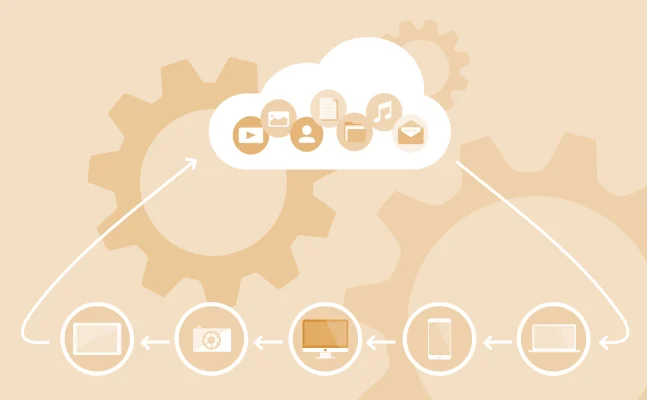
Edge versus cloud IoT
The main difference between edge IoT and cloud IoT lies in where data processing happens in an IoT system. Edge IoT processes data locally, either on the device itself or on a nearby gateway, enabling real-time decision-making with minimal latency. This local processing reduces the amount of data that needs to be transmitted to a central server, leading to lower bandwidth usage and improved reliability, especially in environments with limited internet connectivity.
By keeping sensitive data on-site, edge computing also enhances security by reducing exposure to cyber threats and minimizing the risk of data interception during transmission. Because of these advantages, edge computing is commonly used in applications in which speed and autonomy are essential, such as industrial automation, autonomous vehicles, and smart surveillance systems.
Cloud IoT, on the other hand, relies on centralized cloud servers for data processing, storage, and analysis. Devices continuously send data to the cloud, where advanced computing resources can perform complex analytics and machine learning-driven insights. While this approach enables large-scale data aggregation and deeper insights, it also introduces higher latency and increased reliance on internet connectivity.
Cloud IoT also introduces security considerations, as data transmitted over networks and stored in centralized servers may be more vulnerable to breaches, which means it requires strong encryption, authentication, and compliance measures. Cloud IoT is more suitable for applications that require long-term data storage, predictive analytics, and remote device management rather than real-time processing.
Many modern IoT systems adopt a hybrid approach that combines edge and cloud computing to maximize efficiency. In this model, critical real-time operations occur at the edge, ensuring rapid response times, while the cloud handles more complex analytics and historical data storage.
What are the advantages of IoT edge computing?
There are many advantages of edge computing in IoT. Some of these included:
Local data processing
One of the key advantages is real-time data processing, allowing IoT devices to analyze and act on data immediately without relying on cloud servers. This is particularly useful in time-sensitive applications like industrial automation, autonomous vehicles, and smart surveillance, where even a slight delay could hinder performance or safety.
Reduced bandwidth
Another significant benefit of IoT edge is bandwidth optimization. Since devices process and filter data before sending it to the cloud, only relevant or summarized information is transmitted, reducing network congestion and lowering costs associated with cloud storage and data transfer. This selective data transmission is especially beneficial for IoT deployments generating massive data volumes, such as smart cities, energy grids, and industrial IoT ecosystems.
Enhanced security
Security and privacy are also enhanced at the edge. By keeping sensitive data closer to the source, organizations can reduce exposure to cyber threats and minimize the risks associated with transmitting confidential information over public networks.
Final thoughts
Edge computing in IoT is unlocking new possibilities to collect and analyze data in real-time. Moreover, with novel cybersecurity attacks constantly emerging, edge computing also offers a new layer of protection that the cloud can’t provide. While many emerging technologies focus on new levels of integration with the cloud, edge computing invites IoT developers to look to a new direction – not inward, but outward at the edge.
Read our other resources
We’ve published a range of resources for our community, including:
- Understanding low latency in IoT
- Our list of best practices for IoT data security
- Understanding WebRTC security architecture