

As the first quarter of 2025 wraps up, more businesses are shifting away from relying solely on the cloud and turning to edge computing. In edge computing, data gets processed closer to where it’s created – rather than in faraway cloud servers – which helps reduce lag and improve security. Peer-to-peer (P2P) communication is often a major part of edge computing infrastructure, allowing devices to communicate directly without forwarding data through the cloud. Companies are making this move to avoid high cloud costs, cut down on delays, and keep tighter control over sensitive data.
In 2017, Gartner estimated that by 2025, 75 percent of all data would be processed outside of traditional data centers. While that shift hasn’t fully materialized yet, the growing number of connected devices and IoT sensors is accelerating the move toward edge-based computing models. By keeping processing close to where data is generated – in homes, vehicles, factories, or smart city infrastructure – companies can respond more quickly and securely to real-time events.
Want to start using P2P connectivity in IoT?

Then you’ll want to see the Nabto Platform in action. Book a meeting today with one of our P2P IoT experts to get started.
Shifting from cloud to the edge
As businesses generate and process vast amounts of data, many are realizing that traditional cloud storage models come with inherent limitations. The cloud, while scalable and convenient, introduces latency issues, security vulnerabilities, and high bandwidth costs, making it less suitable for applications requiring real-time data analysis and immediate decision-making.
One major challenge is latency – the delay that occurs when data travels between the source – such as IoT sensors or enterprise applications – and cloud data centers, which may be located thousands of miles away. This lag can be detrimental in applications in which split-second decision-making is required, such as autonomous vehicles, financial trading, and industrial automation. Even a slight delay in transmitting and processing data in these areas can result in inefficiencies, operational downtime, or safety risks.
Security is another pressing concern. Centralized cloud infrastructure creates a single point of failure, making it an attractive target for cyberattacks, increasing the risk of data breaches, ransomware attacks, and unauthorized access. Additionally, strict data privacy regulations – such as GDPR in Europe and CCPA in California – are making it more challenging for companies to store and process sensitive information in public cloud environments.
Edge computing allows companies to process and store data locally, closer to where it’s generated. Instead of sending everything to a remote cloud server, companies can use nearby devices or small on-site data centers to handle computing tasks. This approach improves speed, boosts reliability and security, and helps cut the costs tied to cloud storage and data transfers.
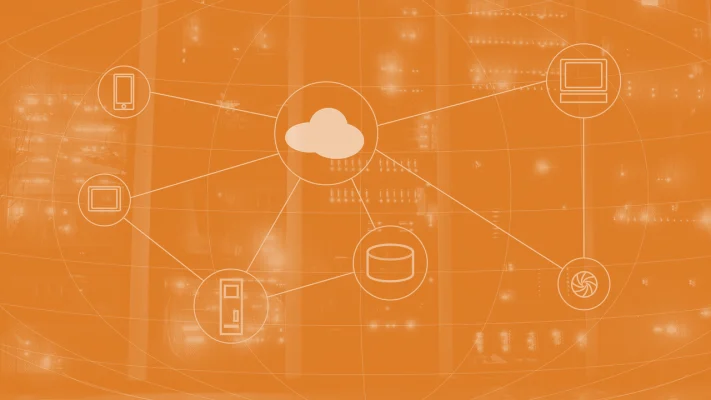
Top trends in edge computing
Edge computing is on a strong growth trajectory, with businesses increasingly recognizing its advantages over traditional cloud systems. One forecast predicts that global spending on edge computing will reach $378 billion by 2028, driven by the demand for real-time analytics, peer-to-peer communication, AI-driven automation, and improved customer experiences. Several key trends will shape the future of edge computing. Here are some of my predictions for edge computing trends.
1. Increased AI adoption at the edge
In the coming months, I expect to see more businesses running AI directly on edge devices – enabling faster, automated decisions without relying on cloud processing. This will be especially impactful in IoT use cases, in which devices need to analyze and act on data in real time. As models become more efficient and easier to deploy, edge-based AI will play a bigger role in areas like autonomous vehicles, industrial sensors, and smart surveillance systems.
2. Stronger data privacy regulations
As edge computing spreads, it will bring data processing to more locations – often outside the traditional boundaries of centralized IT. I expect this growing complexity to prompt tighter regulations around how and where sensitive data is handled. Governments will likely introduce new rules to address the risks of decentralized data storage, especially in sectors like healthcare, finance, and critical infrastructure. In response, companies will need to strengthen encryption, tighten access controls, and update their compliance strategies. P2P communication at the edge is often more secure than cloud-based computing, especially with end-to-end encryption like what Nabto provides.
3. Improved sustainability and green computing
As more companies move to edge computing, I expect we’ll see measurable gains in energy efficiency simply as a result of this shift. Processing data closer to where it’s generated reduces reliance on large, power-hungry data centers and cuts down on the energy costs of data transmission. While many businesses may adopt edge computing for performance or security reasons, the environmental benefits will follow.
Final thoughts
The shift toward decentralized, intelligent, and secure computing environments is accelerating. Edge computing has become a critical pillar of modern IT infrastructure, enabling faster processing, enhanced security, and cost-effective scalability. This is especially true in IoT-heavy sectors, in which businesses need to manage and analyze data from thousands of distributed devices in real time.
Companies that embrace these technologies will gain a competitive advantage by improving operational efficiency, reducing latency, and ensuring greater control over their data in the years ahead.
Read our other resources
We’ve published a range of resources for our community, including:
- A guide to IoT and edge computing
- Understanding low latency in IoT
- The challenge of regulatory compliance in IoT